Oct 3, 2026 · Forklift · 3 Min Read
Forklift Pre-Operation Inspection Guide
TradeCertPrep.ca Editorial Team
Author
What to check before every shift, when to take a forklift out of service, and the habits that keep pedestrians safe around powered lift trucks.
Most forklift safety comes down to two habits: checking the truck before you use it and staying aware of the people around you while you do. Both are simple, and both are usually part of the training your employer gives you. This guide walks through what they involve.
Why the inspection happens before every shift
A forklift can change condition between one shift and the next, so the pre-operation inspection is done at the start of each shift, before the truck is used, and it is normally documented. The point is to find a problem while the truck is parked, not while it is carrying a load.
What a typical inspection covers
- Tires and wheels: damage, wear and, on pneumatic tires, pressure.
- Forks and carriage: cracks, bends or wear, and that the forks are secure.
- Mast, chains and hydraulics: smooth movement, damaged chains and any hydraulic fluid leaks.
- Controls: steering, brakes, parking brake and the lift and tilt controls.
- Safety devices: horn, lights, backup alarm if fitted, seatbelt and any other operator restraint.
- Power source: battery condition and charge for electric trucks, fuel and cylinder condition for propane trucks.
- Data plate and labels: present and legible.
If something is wrong
If the inspection reveals a defect that affects safe operation, such as a hydraulic leak, bad brakes or a damaged fork, do not use the truck. Tag it out of service and report it as your site procedure requires. Reporting a defect is part of the job, not a complaint.
Refuelling and recharging
Change propane cylinders and recharge batteries only in designated, well-ventilated areas, with the truck shut off and following the procedures you were trained on. These tasks involve fire and gas hazards, so they are not something to do in a hurry in a busy aisle.
Pedestrian safety
Pedestrians are the most vulnerable people in a workplace with forklifts. Good operators build a few habits.
- Slow down and sound the horn at intersections, doorways and blind corners.
- Make eye contact and be ready to stop when a pedestrian is in your aisle.
- Look in the direction of travel, over your shoulder when reversing, and use mirrors only as a help.
- Never let anyone ride on a forklift that was not built to carry a passenger, and never lift a person on the forks. Use an approved work platform properly attached to the truck when a person must be raised.
- Never let anyone walk or stand under raised forks or a raised load.
- Keep a safe following distance behind other trucks. A common rule of thumb is at least three truck lengths.
- Before leaving the truck, even briefly, lower the forks, apply the parking brake and shut it off.
Only trained, authorized people
In a Canadian workplace, only workers who have been trained and formally authorized by the employer should operate a powered lift truck. The practice tests here can help you prepare, but they do not replace that training.
Practise the scenarios
- Forklift Pedestrian Safety & Operating Practices.
- Forklift Attachments, Maintenance & Site Hazards.
- Forklift Fundamentals Practice Test.
This article is an unofficial study guide. It does not replace the training your employer or an accredited training provider gives you, and rules and truck types vary, and your trainer and the truck's manual apply, so follow your site's procedures and your regulator's requirements.
Recent blog & articles
Fresh ideas, insightful stories, and the latest updates.
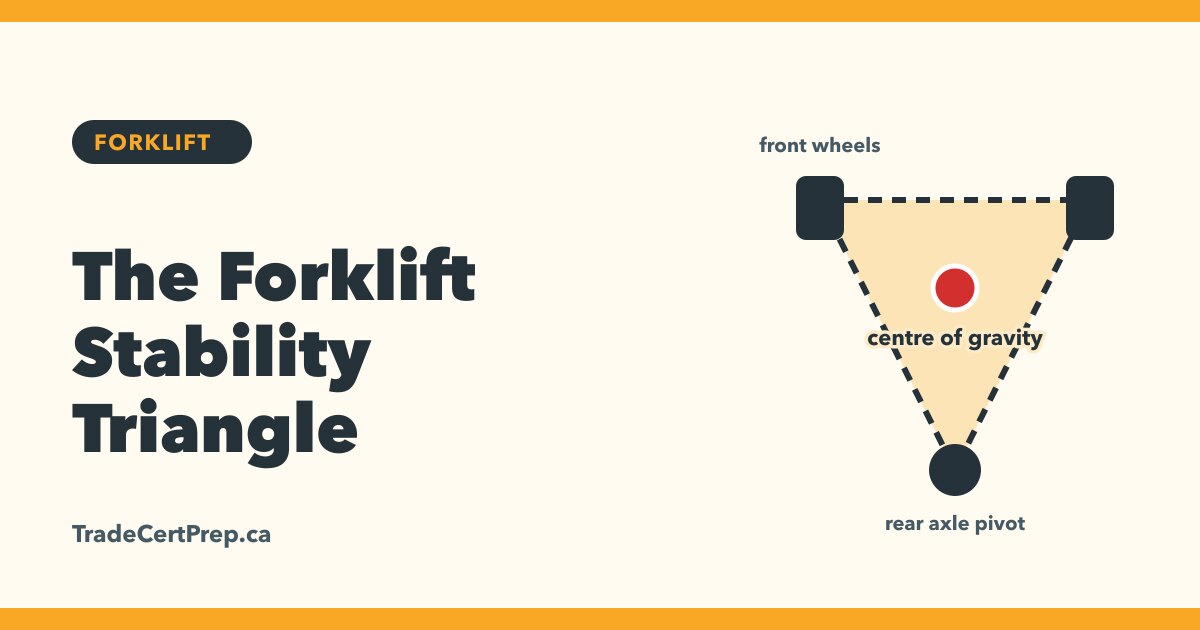
Forklift Stability Triangle Explained
Why forklifts tip and how to prevent it: the stability triangle, load centre, capacity plates and safe driving on ramps, explained in plain language.

How to Read a WHMIS Safety Data Sheet
Every safety data sheet uses the same 16 sections in the same order. Learn which section answers which question so you can find what you need fast.