Sep 24, 2026 · WHMIS · 2 Min Read
WHMIS Pictograms and Hazard Classes Guide
TradeCertPrep.ca Editorial Team
Author
Learn what each WHMIS 2015 pictogram means, how physical and health hazard classes are grouped, and why one product can show more than one symbol.
Pictograms are the part of WHMIS most people remember, because they are on the label of nearly every hazardous product. Each one is a black symbol on a white background inside a red diamond border, and each stands for a type of hazard. Here is how to read them and how they connect to the hazard classes behind them.
The pictograms and what they mean
- Flame: flammable products such as certain gases, liquids and solids, and some products that can ignite on their own or release flammable gas.
- Flame over circle: oxidizers, which can cause or intensify a fire by supplying oxygen.
- Exploding bomb: explosive or self-reactive products and some organic peroxides.
- Gas cylinder: gases under pressure, including compressed, liquefied, dissolved and refrigerated liquefied gases.
- Corrosion: products that can burn skin, damage eyes or corrode metals.
- Skull and crossbones: acute toxicity, meaning a product that can be fatal or toxic if swallowed, inhaled or absorbed through the skin.
- Exclamation mark: a lower level of concern than the skull, such as skin or eye irritation or harm after a short exposure.
- Health hazard: longer-term or more serious effects, such as cancer, respiratory sensitization or damage to organs.
- Biohazardous infectious materials: organisms or toxins that can cause disease in people or animals. This symbol was added specifically for WHMIS and is not part of the standard GHS set.
Two groups of hazard classes
Behind the pictograms, WHMIS sorts hazards into two broad groups.
- Physical hazards relate to what a product can do physically, such as burn, explode or leak under pressure. Flammable liquids are a typical example.
- Health hazards relate to what a product can do to the body. Acute toxicity and skin corrosion are typical examples.
Within a class, numbered categories usually show how severe the hazard is, with lower numbers generally meaning a more serious hazard.
Why a label can have several symbols
A product is classified against every hazard class, and the label must show all the pictograms that apply. A solvent might be both flammable and an irritant, so you would see the flame and the exclamation mark together. Never assume one symbol tells the whole story.
Signal words and hazard statements
Pictograms sit alongside a signal word. "Danger" is used for more severe hazards and "Warning" for less severe ones. The label also carries hazard statements that say what the hazard is and precautionary statements that say how to reduce the risk.
Test yourself
- WHMIS Pictograms & Hazard Classes Practice Test (12 questions).
- WHMIS Labels Deep-Dive to see how pictograms fit on a full label.
This article is an unofficial study guide. It does not replace the training your employer or an accredited training provider gives you, and rules can differ by province or workplace, so follow your site's procedures and your regulator's requirements.
Recent blog & articles
Fresh ideas, insightful stories, and the latest updates.
Forklift Pre-Operation Inspection Guide
What to check before every shift, when to take a forklift out of service, and the habits that keep pedestrians safe around powered lift trucks.
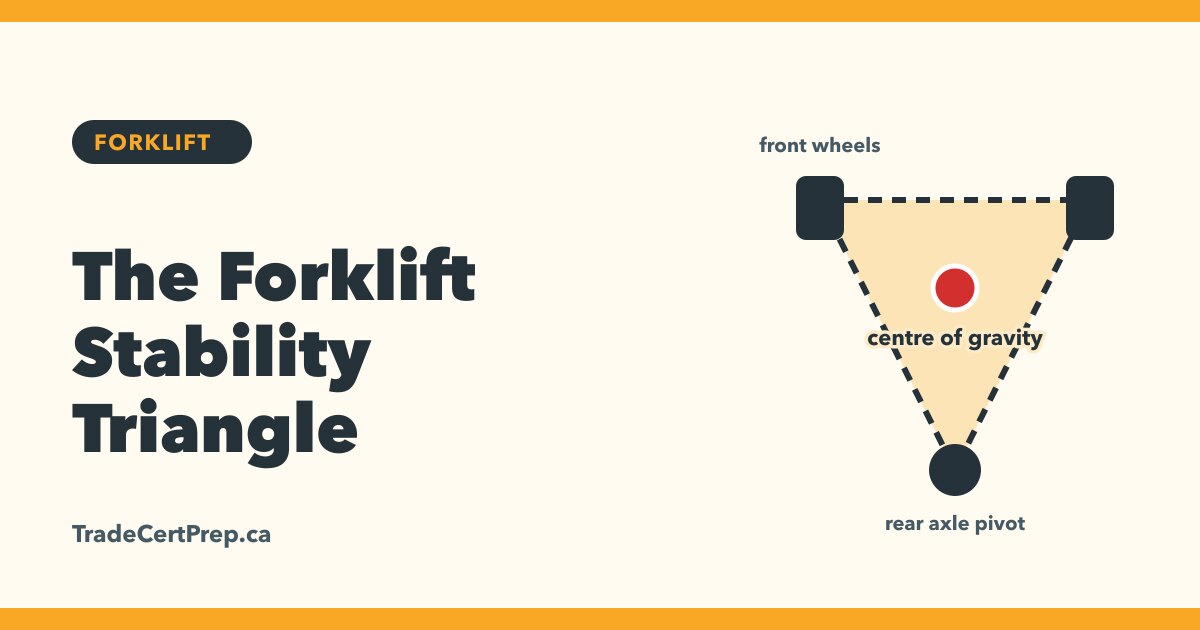
Forklift Stability Triangle Explained
Why forklifts tip and how to prevent it: the stability triangle, load centre, capacity plates and safe driving on ramps, explained in plain language.